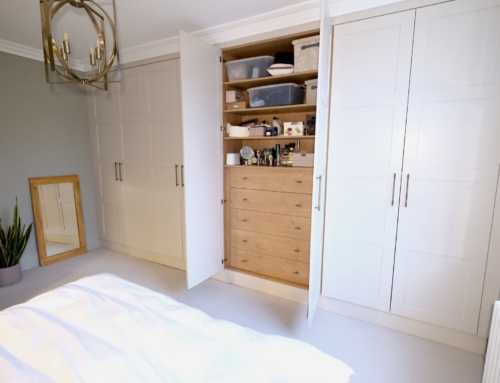
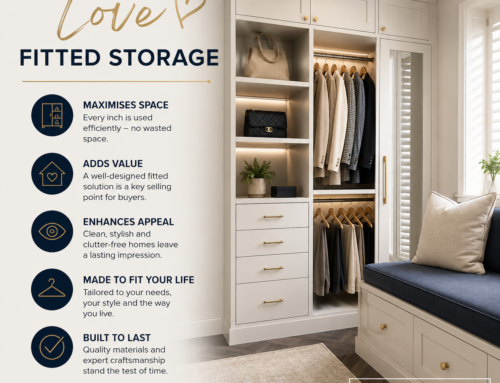
When it comes to fitted wardrobes, the material used behind the scenes matters just as much as the final finish. Homeowners searching for “fitted wardrobes near me” or a trusted bespoke joiner often focus on colour and style, but the choice between MDF, MFC, and plywood affects durability, weight, moisture resistance, and long-term value. Understanding these differences helps you make an informed decision on your made-to-measure furniture and ensures your wardrobes stand the test of time rather than warping, sagging, or wearing out prematurely.
Each material has its own strengths and best-use cases, and experienced carpenters often combine them within a single piece of furniture to get the best balance of cost, strength, and finish. Below, we break down what MDF, MFC, and plywood actually are, and where each performs best in wardrobe construction.
MDF: The Versatile Choice for Painted and Sprayed Finishes
MDF, or Medium-Density Fibreboard, is made by compressing wood fibres with resin under heat and pressure, creating a smooth, dense, uniform material. It’s ideal for intricate shapes, routed detailing, and shaker-style panels, and takes paint and spray finishes exceptionally well — which is why it’s the material of choice for sprayed wardrobe doors with a high-end, factory-smooth appearance.
The main drawback of MDF is its weight and moisture sensitivity. Standard MDF can swell or degrade if exposed to damp conditions, so moisture-resistant MDF (MR MDF) is often specified in bathrooms or higher-humidity areas.
MFC: Cost-Effective and Consistent for Carcasses
MFC, or Melamine Faced Chipboard, consists of a chipboard core bonded with a decorative melamine layer on both faces. It’s widely used for wardrobe carcasses, shelving, and internal components because it’s stable and available in a huge range of colours and woodgrain finishes straight from the factory, without the need for painting.
MFC is generally more affordable than MDF or plywood, making it a practical choice for internal structure where the finish won’t be visible. It’s less suitable for load-bearing shelves over long spans, as the chipboard core can chip at cut edges if not properly finished.
Plywood: Strength and Stability for Structural Elements
Plywood is made from thin layers of wood veneer glued together with the grain running in alternating directions. This cross-layered construction gives plywood excellent strength-to-weight ratio, resistance to warping, and the ability to hold screws and fixings securely — qualities that make it the preferred choice for structural elements, hanging rails, and heavy-duty shelving.
Plywood typically costs more than MFC, but its durability makes it a worthwhile investment for weight-bearing components. Many bespoke carpenters use birch-faced plywood for drawer boxes and internal framework, pairing it with MDF or MFC for visible surfaces to balance cost with performance.
Choosing the Right Combination for Your Wardrobe
In practice, the best fitted wardrobes rarely rely on a single material. A well-built wardrobe might use plywood for the carcass and structural framework, MFC for internal shelving and drawer sides, and sprayed MDF for the visible doors and face frames. This combination delivers the ideal balance of strength, cost-efficiency, and a premium finish that will last for years — whether you’re after a handleless fitted wardrobe with clean modern lines, a floor-to-ceiling design that maximises every inch of a room, or fluted wardrobe doors for a softer, more decorative look.
At Militao Carpentry Ltd, we select materials based on the specific demands of each project, ensuring every fitted wardrobe we build is both beautiful and built to last. If you’re planning a bespoke wardrobe project and want expert advice on the right materials for your space, our team is happy to talk you through the options.
Serving Oxted and the Surrounding Areas
Militao Carpentry Ltd is based in Oxted, Surrey, and we deliver bespoke carpentry, fitted wardrobes, and joinery services across the wider region. Whether you’re comparing bespoke vs modular wardrobes, weighing up wardrobe cost per linear metre, or simply searching for built-in wardrobes London homeowners trust, we’ve seen growing demand from Reigate, Redhill, Edenbridge, Westerham, Caterham, Sevenoaks, Tunbridge Wells, and Bookham — as well as further afield in Chelsea, Knightsbridge, and Wandsworth. Wherever you’re based, our team brings the same commitment to quality, precision, and craftsmanship to every project.
Areas We Cover Near Oxted
- Reigate
- Redhill
- Edenbridge
- Westerham
- Caterham
- Sevenoaks
- Tunbridge Wells
- Bookham
- Chelsea
- Knightsbridge
- Wandsworth